


Using Excel to Calculate a Weighted Average
In September, half of these shares were repurchased by the company, reducing the number of outstanding shares to 75,000. While outstanding shares are a determinant of a stock’s liquidity, the latter is largely dependent on its share float. A company may have 100 million shares outstanding, but if 95 million of these shares are held by insiders and institutions, the float of only five million may constrain the stock’s liquidity.
How Do Stock Buybacks Influence Shares Outstanding?
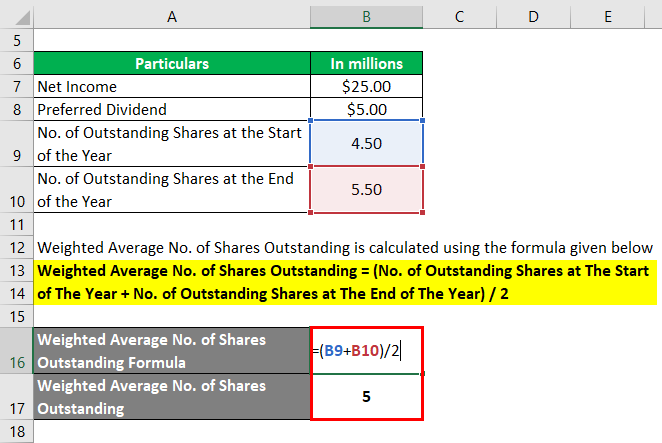
Calculating a weighted average of outstanding shares is important because it allows a company to calculate its earnings per share (EPS), which is a measurement of how much money a company makes for each share of its stock. Potential investors in a company look at the EPS as an indicator of the company’s profitability and compare this metric with the EPS of other companies before making an investment decision. In the above example, if the reporting periods were each half of a year, the resulting weighted average of outstanding shares would be equal to 150,000. Thus, in revisiting the EPS calculation, $200,000 divided by the 150,000 weighted average of outstanding shares would equal $1.33 in earnings per share. A company’s outstanding shares may change over time because of several reasons.
Related AccountingTools Course
Weighted average shares is the number of all common stock that is in affect for a specific time frame, whereas basic shares are companies issued amount of common stock with actual stock certificates that have been issued. For example, let’s say a company has 100,000 shares outstanding at the start of the year. Halfway through the year, it issues new shares in the amount of an additional 100,000 shares.
Valuing a Company through Shares Outstanding
With this weighted average, we can now calculate a different and more accurate EPS of $0.80 per share. A weighted average is a way of taking the average of several numbers when a different „weight“ is assigned to each one. A common example of a weighted average is calculating a grade point average for courses with different numbers of credit hours. Suppose that Company XYZ Corporation has 500,000 shares at the beginning of its fiscal year.
Undistorted view of Earnings Per Share
Therefore, all public companies determine the weighted average number of shares outstanding at the end of their reporting period to calculate and report EPS in their financial statements. Let’s take an example to illustrate how the sale and purchase of common shares impact the company’s weighted average number of shares outstanding. Companies typically issue shares when they raise capital through equity financing or when they exercise employee stock options (ESOs) or other financial instruments.
What triggers changes in WASO?
Since no new shares were issued in this case, each month had 100 thousand shares outstanding; hence, the Company had 1 thousand shares outstanding over the year. The figure for number of outstanding debit balance definition shares does not include any treasury stock. Understanding how to calculate a weighted average can also be useful to individual investors who want to calculate their cost basis.
- Outstanding shares decrease if the company buys back its shares under a share repurchase program.
- While WASO provides valuable insights, it should not be the sole metric in assessing a company’s health.
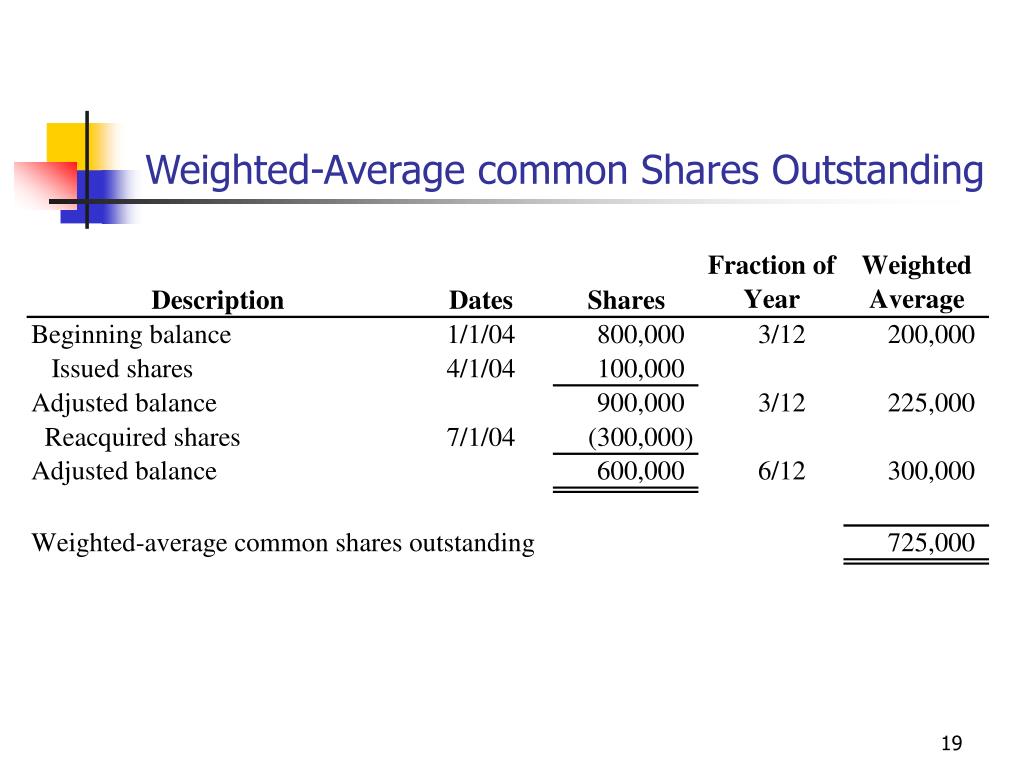
- Below is the Weighted Average Shares calculation example when shares are issued and repurchased during the year.
- On the other hand, while calculating the dilutive EPS, the denominator includes all possible conversions that can take place and increase the number of shares held by parties.
- This potentially large range is the reason why a weighted average is used, as it ensures that financial calculations will be as accurate as possible in the event that the amount of a company’s shares changes over time.
Stock prices change daily and keeping track of the cost basis of shares accumulated over many years is desirable. A company may issue new shares to investors or buy its own shares from them during a period. Every time a company issues or repurchases shares, the total number of its outstanding shares changes.
Weighted averages may also be used in other aspects of finance including calculating portfolio returns, inventory accounting, and valuation. These actions can signal different strategic moves, such as a company’s confidence in its stock or efforts to consolidate ownership. By doing so, WASO offers a more accurate reflection of the company’s equity structure over time, crucial for financial analyses like Earnings Per Share (EPS) calculations. 11 Financial may only transact business in those states in which it is registered, or qualifies for an exemption or exclusion from registration requirements. 11 Financial’s website is limited to the dissemination of general information pertaining to its advisory services, together with access to additional investment-related information, publications, and links. Thus, the situation during the year was equivalent to having 111,000 shares outstanding throughout the year.